Looking for personalised tutoring or homeschooling support?
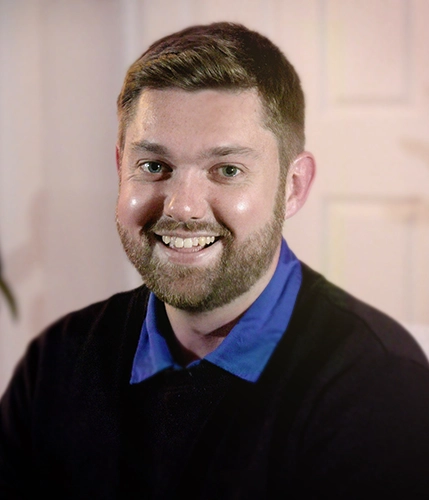
Thomas Harley did not set out to build an education company.
After studying economics and geography at university, he started working in data analytics at an investment bank in the City. Within six months, he realised corporate life was not for him.
Tutoring, which had started as a way to earn extra money while studying, became his next step. What was meant to be a short-term stopgap eventually became a career and, later, HRB Education.
In his conversation with circle.cloud founder Axel Molist, Thomas talks about how he got into tutoring, what led him to start HRB Education, why the company puts quality before rapid growth and what he believes needs to change in education.
Axel Molist: What is your background?
Thomas Harley: I probably do not have the most conventional background for somebody running an education company.
At university, I studied economics and geography. I had my sights set on working for big banks and going into data science, while tutoring on the side to earn some extra money.
I followed the route you are supposed to follow. I went through university, graduated and got a job in data analytics at an investment bank in the City.
Within about a month, I realised something was not quite working. I kept pushing because I thought maybe it was just the adjustment from university to a nine-to-five. But after about six months, I knew it was not the life I wanted.
So I quit.
I went back to tutoring, thinking it would be a short-term stopgap. Then one month became two, two became three, and I realised I was actually enjoying myself again.
What was supposed to be a two-month stopgap became an entire career.
Axel Molist: Was there a moment when you realised tutoring could become something bigger?
Thomas Harley: There were probably two.
The first came when a family I worked with referred me to another family who wanted tutoring over Easter. I assumed they were in London. Then, about a week or two before I was due to start, they told me they were in Switzerland and were going to fly me out.
I was only about three months into my tutoring career.
Suddenly, tutoring went from something I thought university students simply did on the side to something where I could see there was a massive market.
A few years later, I was working in Switzerland again on a term-long residential homeschooling role. I looked at my pay and realised I was losing about a third of it to the agency.
That was when I thought, "I am going to give this a go myself."
I came home and started creating a brand and an identity.
That is where HRB came from. The initials belonged to my grandfather. He ran a small business in Norwich and had this entrepreneurial spirit. Everybody in the town knew him, and people would stop and say hello.
I liked the idea of something small-scale, high-quality and with a friendly face behind it.
Axel Molist: What makes HRB stand out from other agencies?
Thomas Harley: For me, the key thing is honesty. We only deliver what we know we can deliver to a very high standard.
We hire high-quality tutors and put them through an extensive vetting process. More importantly, we keep the children at the centre of what we are doing.
We only take on a certain number of children each year. We could have grown much faster and taken on more families, but if we suddenly took on another 70 families, there would be no way to make sure every student was getting exactly what they needed.
It has slowed our growth a little, but it means quality has remained the number-one priority.
Axel Molist: Is finding the right tutors more difficult than finding clients?
Thomas Harley: Counterintuitively, yes.
If we hire the right tutors and teachers and they deliver the right lessons, our reputation and word of mouth will continue to grow.
Even now, around 75% of our new business comes through referrals. When you are working with somebody's child, a recommendation from another parent carries a lot of weight.
Axel Molist: Thomas, what is broken with the education system?
Thomas Harley: That is a hell of a question.
The number-one issue for me is that education has barely adapted or changed in the past 50, 60 or 70 years.
Look at the way we teach. Look at the resources we use. Look at the curriculums we follow. Updates are slow to come by, if they happen at all.
Education is not necessarily representative of the real world that children are going to enter.
There are a number of factors behind that, but ultimately it is a complicated problem.
Axel Molist: A lot of children do not perform well in an exam environment but can excel elsewhere and go on to do very well in life.
Thomas Harley: One hundred percent.
I have seen students I have worked with, and even family members, who simply are not built for recalling information in a two-hour exam while they are cold and nervous.
But they have the skills to succeed in life.
Much more important is critical thinking. Do I trust the information? Where did it come from? What is the perspective behind it? What does it mean for what I am doing?
Critical thinking is difficult to teach, but it is so important because you have to question what you are reading.
Axel Molist: I always found that when I was interested in something, I learned much more easily. Do you think children need more choice in what they learn?
Thomas Harley: I completely agree.
My main subject is geography, and to me it is one of the most fascinating subjects there is because it is about the world we live in today.
But people who might otherwise love it can get switched off because they are told to learn plate boundaries from a textbook and remember an eruption that happened before they were born.
I have even taught lessons with a live stream of an erupting volcano in the corner because it was happening at that exact moment.
You have to make it fun. You have to make it interesting.
Most subjects are incredibly transferable.
Take A-level Business. Instead of saying, "Here is the definition of limited liability. Memorise it and move on," you could teach the concept through a business the student might actually want to start.
Even in a classroom, you could ask students which sector interests them and connect lessons back to that.
Students then have some buy-in because they understand what they are doing and why.
Axel Molist: It sounds like the deeper you scratch, the more broken things become.
Thomas Harley: One hundred percent.
In a properly functioning system, companies like mine would probably be much smaller because there would not be as much need for us.
At the moment, we are almost like the tape holding the system together.
The system is breaking.
Maybe it is broken.
We can only help so many children. There are many more children we cannot reach, or who do not have access to the services they need, and the system can simply fail them.
Axel Molist: Motivation to scale, then.
Thomas Harley: One hundred percent.
At the end of the day, I would love to tear down the UK education system and start again.
Obviously, I am biased. Everybody thinks they know all the answers.
But I would want qualified people in roles they are qualified for, and I would like to see children have more space to be children.
Learning can be more interesting and engaging.
That is the direction I would like to see education move in.
Sign up for the latest insights and updates.